Guide to Identifying Authentic Armenian Carpets
Five ways to identify Armenian carpets
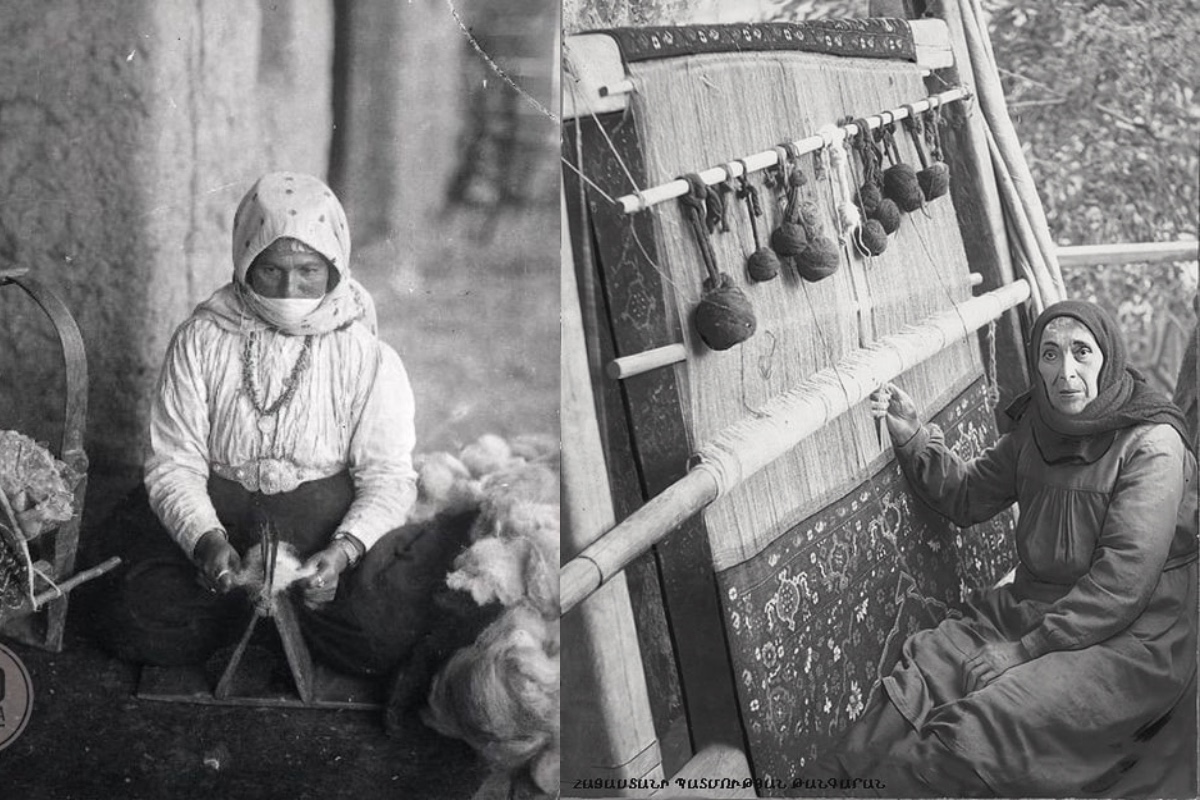
The Armenian Weekly published a practical guide for distinguishing genuine Armenian carpets from pieces mislabeled as Anatolian, Caucasian, or Azerbaijani at international auctions and museums.
The article outlines five identification methods. The Armenian double knot—a distinctive knotting technique that loops yarn twice around paired warp strings—serves as structural proof of origin, visible on the carpet's reverse side. Authentic Armenian carpets use hand-spun wool from local sheep and natural dyes, including vordan karmir (royal crimson) sourced from Ararat Valley insects and lapis lazuli blue. Abrash, subtle color variations within fields, indicates natural dyeing processes and distinguishes authentic pieces from chemical counterfeits.
Symbolic elements provide additional authentication: Armenian inscriptions woven into borders, hidden crosses in geometric designs, and dragon motifs (vishapagorgs) reflecting Christian and secular worldviews. The article notes that the Pazyryk Carpet, a fifth-century B.C. example preserved at the Hermitage Museum, demonstrates the ancient roots and durability of Armenian weaving techniques.